
Kiev or Kyiv?
Language matters—even more at times of crisis. By understanding the background and the difference between Kiev and Kyiv, we can make use of our linguistic capacity to express solidarity with the people of Ukraine and show respect for their language and identity, which, I believe, is one of the many ways to support and contribute.

Merry Christmas or Happy Holidays?
When we don’t know enough about someone’s belief, or indeed, what they celebrate, it would be preferable to use a broader, more inclusive term rather than taking a guess or making assumptions that may potentially make others feel uncomfortable. No one wants to offend anyone, not least at this time of year!

Challenging Unconscious Gender Bias
Gendered language that is rooted in our everyday life may be a sensitive subject to deal with, but if we start today by looking for inclusive alternatives when we speak and write, or even when we are working with our clients or teaching our students, I trust we can contribute to changing attitudes for the…

Future or The Future?
“Future” can be used as an adjective or a noun. In this Ed’s Elevenses blog post, let’s look at some examples and find out whether or not “future” takes any article, and if so, when.
Editorial Perfection – Yea or Nay?
“Are you going to make my work perfect?” is a question or rather a desire often expressed by clients. In this Ed’s Elevenses blog post, I am going to be full and frank about whether or not editorial perfection is a realistic expectation and an achievable mission. I hope clients, authors, and language users alike…

Easy Banana Muffins Recipe
The coronavirus lockdown has seen most of us taking up new hobbies, from learning new languages to going for long walks. It is understandably tough for us to regain a sense of balance amid the chaos on a global scale, so I, like many of us, decided to potter about at the stove and focus…

Themselves or Themself?
Back in the days, I suppose the majority of us were taught phrases such as “They did it themselves.” and “They treat themselves some ice-cream.” In this Ed’s Elevenses blog post, let’s find out whether “themselves” is always the preferred reflexive pronoun or not.
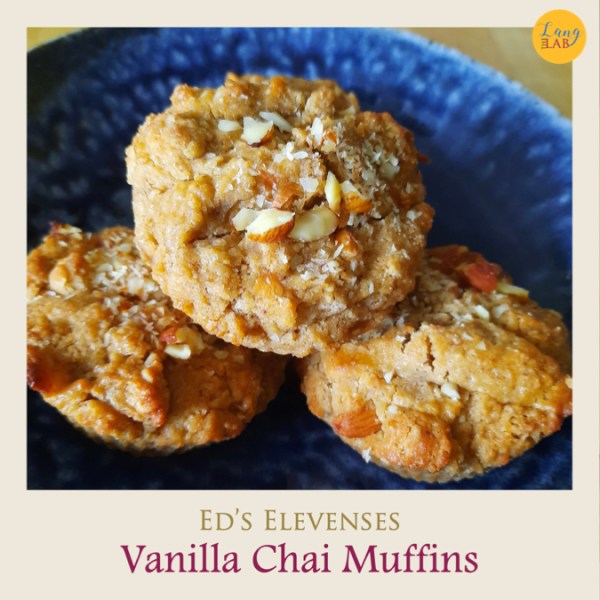
Vanilla Chai Muffins Recipe
Chai, also known as masala chai, is a spiced tea originated from South Asia. Apart from black tea leaves, the main ingredients usually include cardamom, cinnamon, cloves, ginger, and black pepper, all of which are boiled in milk with sugar added, too. In this Ed’s Elevenses blog post, I will talk briefly about chai before…
He, She, S/he or They?
“What’s your pronoun?” has become a polite way with which to start a conversation nowadays. In this blog post, we will look into the use of “he”, “she” or “s/he” versus that of “they”.
What are Split Infinitives?
“To boldly go where no man has gone before.” In this Ed’s Elevenses blog post, we will focus on structures like “to boldly go”, which are also known as split infinitives, and look briefly into why they have been a source of grammatical controversy for centuries.

The Fox and The Dog: What is a Pangram?
Which animals do typographers and calligraphers like? Foxes and dogs! Why? I hear you ask. In this Ed’s Elevenses blog post, we will look at why these quadrupeds (i.e., four-legged animals) have anything to do with typography and calligraphy. Hint: We are going to find out what pangrams are.

What is the Longest Word with No Repeated Letters?
Fun facts: The longest English word in the dictionary contains 45 letters, while the longest place name in Britain has 58 letters in it. In this Ed’s Elevenses blog post, we will find out what the longest English word with no repeated letters is.
What is the Longest English Word?
For those who are familiar with Mary Poppins, they must have heard of the song — Supercalifragilisticexpialidocious. In this Ed’s Elevenses blog post, let’s find out whether or not it is the longest English word to date.

Super or Superb?
Although both “super” and “superb” are common, they are not entirely interchangeable. In this Ed’s Elevenses blog post, we will look at the difference between these two words, and explain which of them is correct to use and when. I hope you won’t be confused by them again after reading this post!
How to Use Apostrophes: A Beginner’s Guide
“Your vs You’re” may be one of the most common offences with which social media users are often charged by the grammar police. In this Ed’s Elevenses blog post, we will look at the three (and sometimes four) major functions of apostrophes and ways to use them appropriately in writing.
The “Year-Old” Problem: When To Use a Hyphen
Talking about age in writing may sometimes be tricky. In this Ed’s Elevenses blog post, we will look at various ways to deal with age. The simplest way to determine when to hyphenate “year old” (or indeed all the “old”s, like “week old” and “minute old”) would be to look for the position of the…
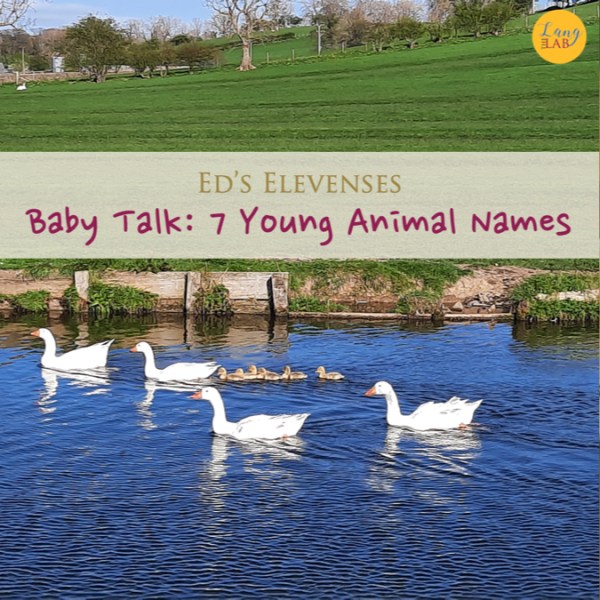
Baby Talk: 7 Young Animal Names
In the midst of a pandemic, I found myself enjoying a lot more time in nature. As it was springtime when all things slowed down, I had the privilege to witness quite a lot of baby animals joining the animal kingdom, which was something rather pleasing to see during lockdown. At this Ed’s Elevenses, I…

Gluten-free Blueberry Buckwheat Muffins Recipe
The fact that buckwheat—misleading though the name seems—does not contain any wheat may not be a particularly exciting piece of information; but for our gluten intolerant friends, it is fantastic news. Packed full of nutrients and dietary fibre, buckwheat flour can be used in numerous recipes, offering us a gluten-free option and that unique hint…

10 Facts About Translators
Translators invest a significant amount of time and energy into researching, writing, and editing multiple times before delivering the finalised text to their clients; likewise, at The Languaging Lab, we take the time to identify the translation and transcreation requirements of your documents, and focus on sector-specific knowledge, contextually-appropriate tone and register, as well as…

Localisation: Translation with a Taste of Culture
Localisation involves translation, but it doesn’t stop there – it goes beyond pure word-by-word linguistic conversion and to produce a culturally-suitable translation for the chosen market, thereby creating resonance between the target audiences and the source message.
Proofreading & Copyediting: Distilling Quality & Accuracy in a Timely Fashion
To the majority of writers, it may seem challenging to ascertain acceptable levels of quality and accuracy have been achieved. This is the moment when skilled help should be actively sought from proofreaders and copyeditors to save us some time and to make our lives easier.

Aye or No?
The political kerfuffle surrounding Brexit indeed continues to fascinate me. Having said that, I must confess I did get distracted by the rather intriguing political terms and phrases used at the UK Parliament.
A Festive Guide to the Pluralisation of Surnames
There was nothing strenuous in the room apparently – the glass of something was gratifyingly simple to make, the handmade cards were a great joy to read…It was, however, when the alien apostrophe took over the stage the joyousness was flawed and my zing was smitten.
What is Languaging?
The eagle-eyed amongst you may have noticed there is something unusual about our name. “What exactly is languaging?” I hear you ask…
 The Languaging Lab | 香港翻譯校對服務